


◔
Remote Control and Screen Sharing
View a remote screen and use approved keyboard, mouse, or view-only permissions for technical assistance, work, demonstrations, and collaboration.
 Call Sales: +81 5017213107
Cross-platform remote desktop software
Cross-platform remote access
Install AnyDesk on compatible devices to start attended support sessions, access authorized unattended endpoints, transfer files, and collaborate across operating systems.
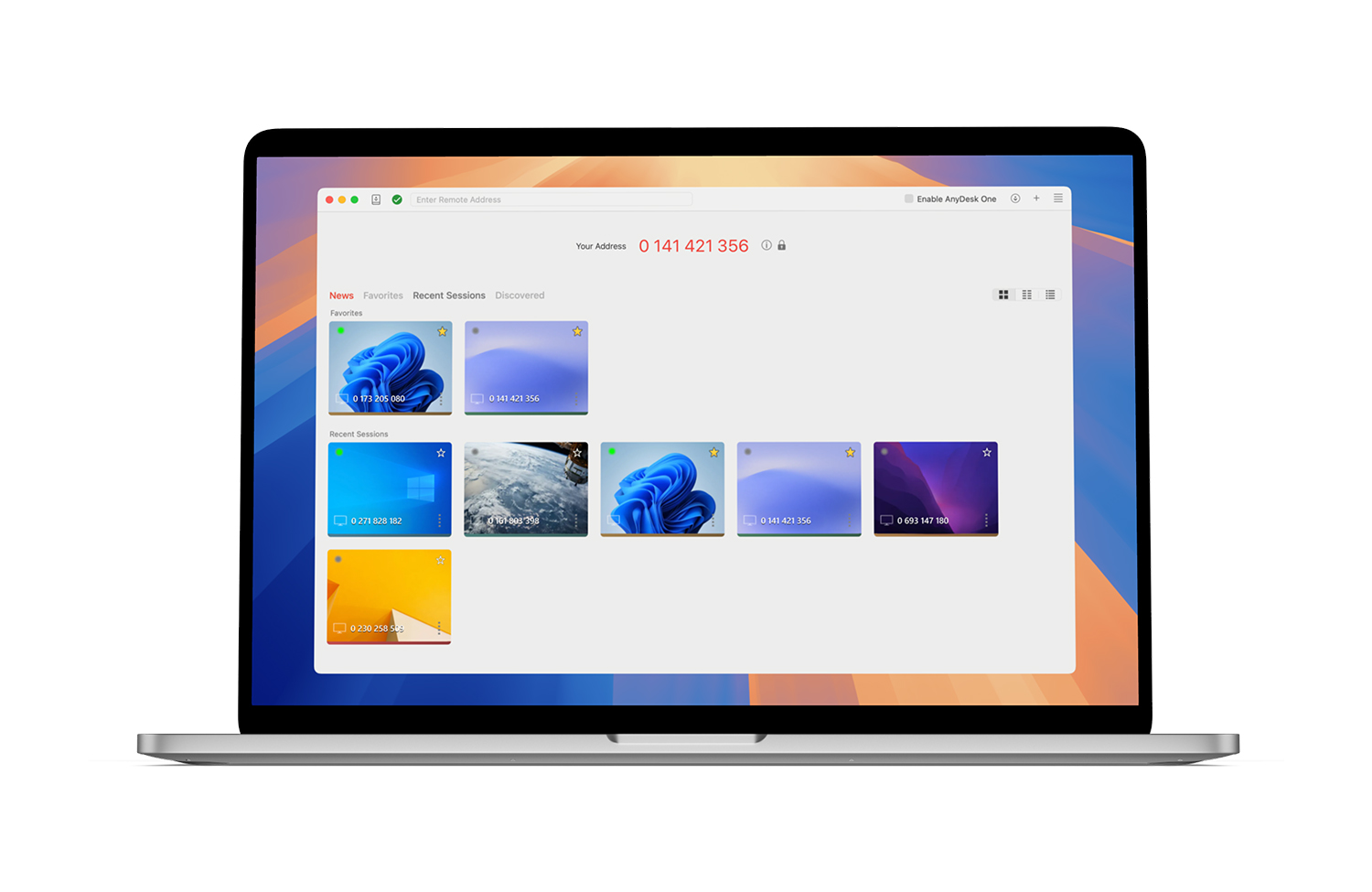
View a remote screen and use approved keyboard, mouse, or view-only permissions for technical assistance, work, demonstrations, and collaboration.
Exchange files and use supported session tools such as clipboard access, remote printing, chat, and recording when enabled by the device and permissions.
Configure authorized office computers, servers, workstations, and dedicated endpoints for remote access without requiring someone to accept every session.
Getting Started with AnyDesk

Remote Desktop Features
Connection Process
Remote session quality depends on network latency, bandwidth, device performance, display settings, and the distance between endpoints. Adjust visual quality when working on slower connections.
Protect remote sessions with connection approval, access passwords, device verification, two-factor authentication where available, and permissions limited to the required tasks.
Use attended sessions for employee or customer assistance, or configure authorized unattended access for servers, office computers, and distributed devices.
Download FAQ
Select the client that matches the operating system of the device where AnyDesk will run. Available remote control and collaboration features may vary by platform and system permissions.
Compatible AnyDesk clients can establish cross-platform remote sessions. The exact controls, permissions, and available features depend on both operating systems.
Android and iOS clients can connect to compatible desktop devices. Input methods, screen controls, and other capabilities vary according to the mobile platform and remote system.
Open AnyDesk on both devices, enter the address of the remote endpoint, and send a session request. The remote user must approve the connection, unless unattended access has already been configured.